
 ⤣ SERIES
Vanity Mirror
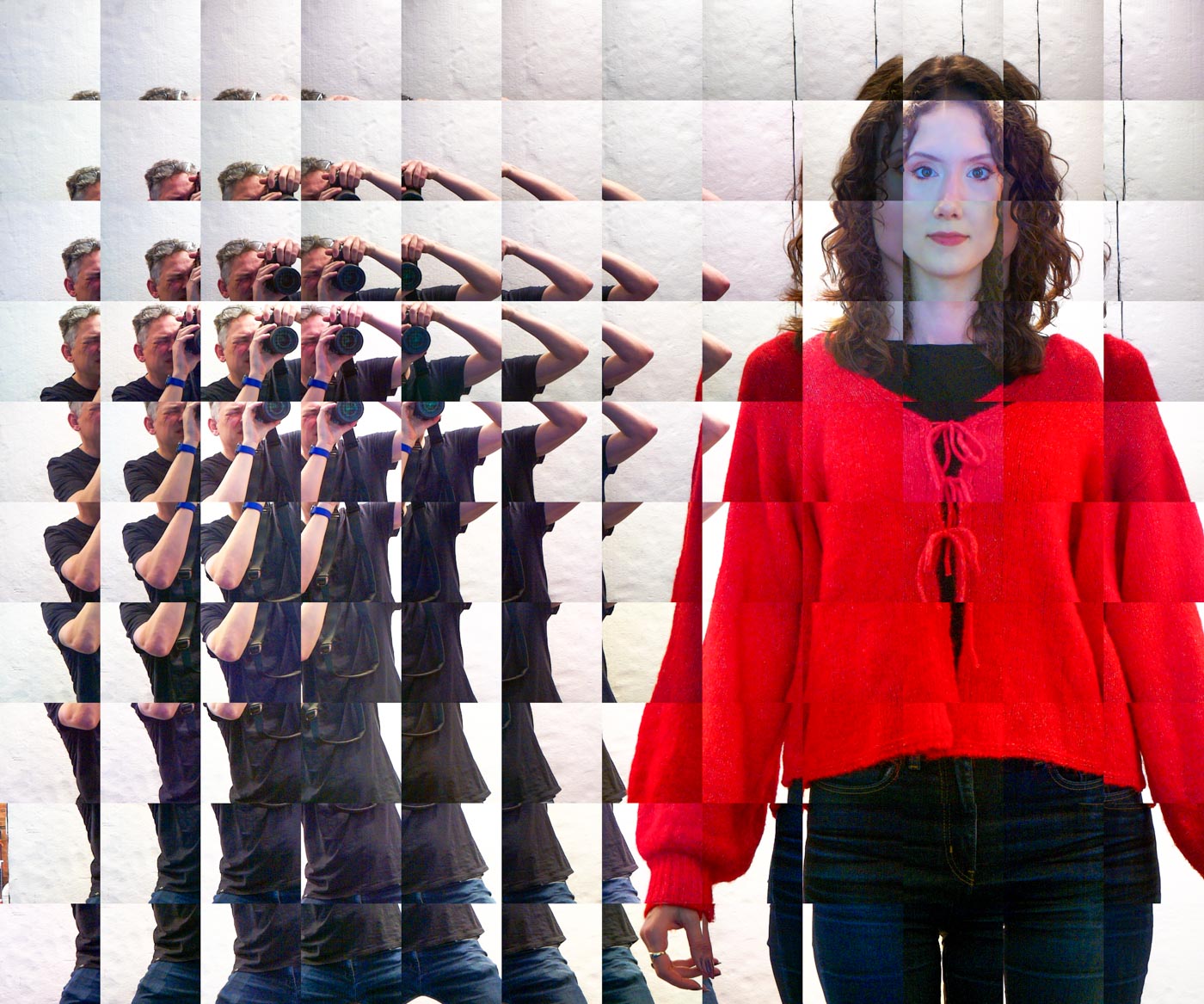
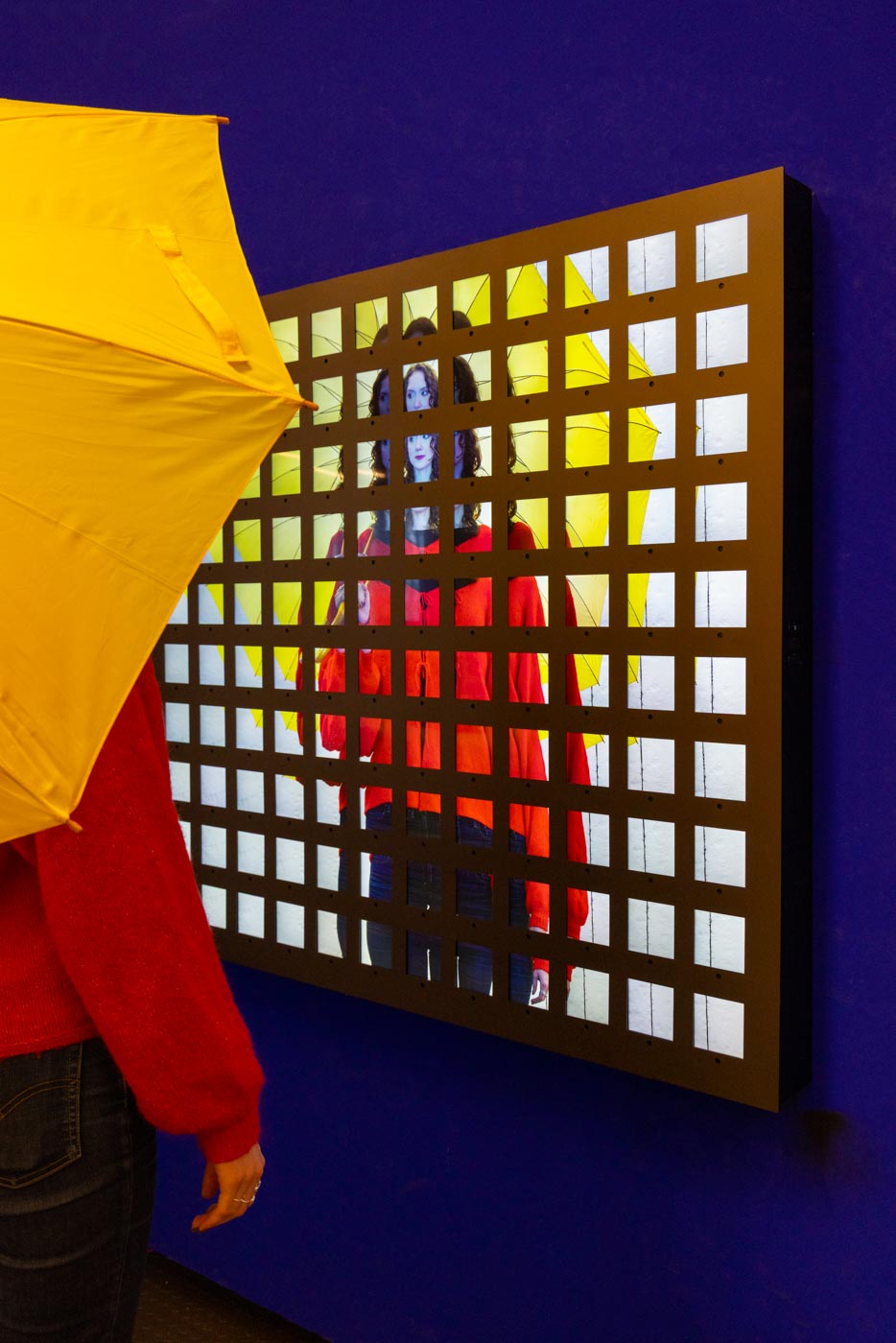
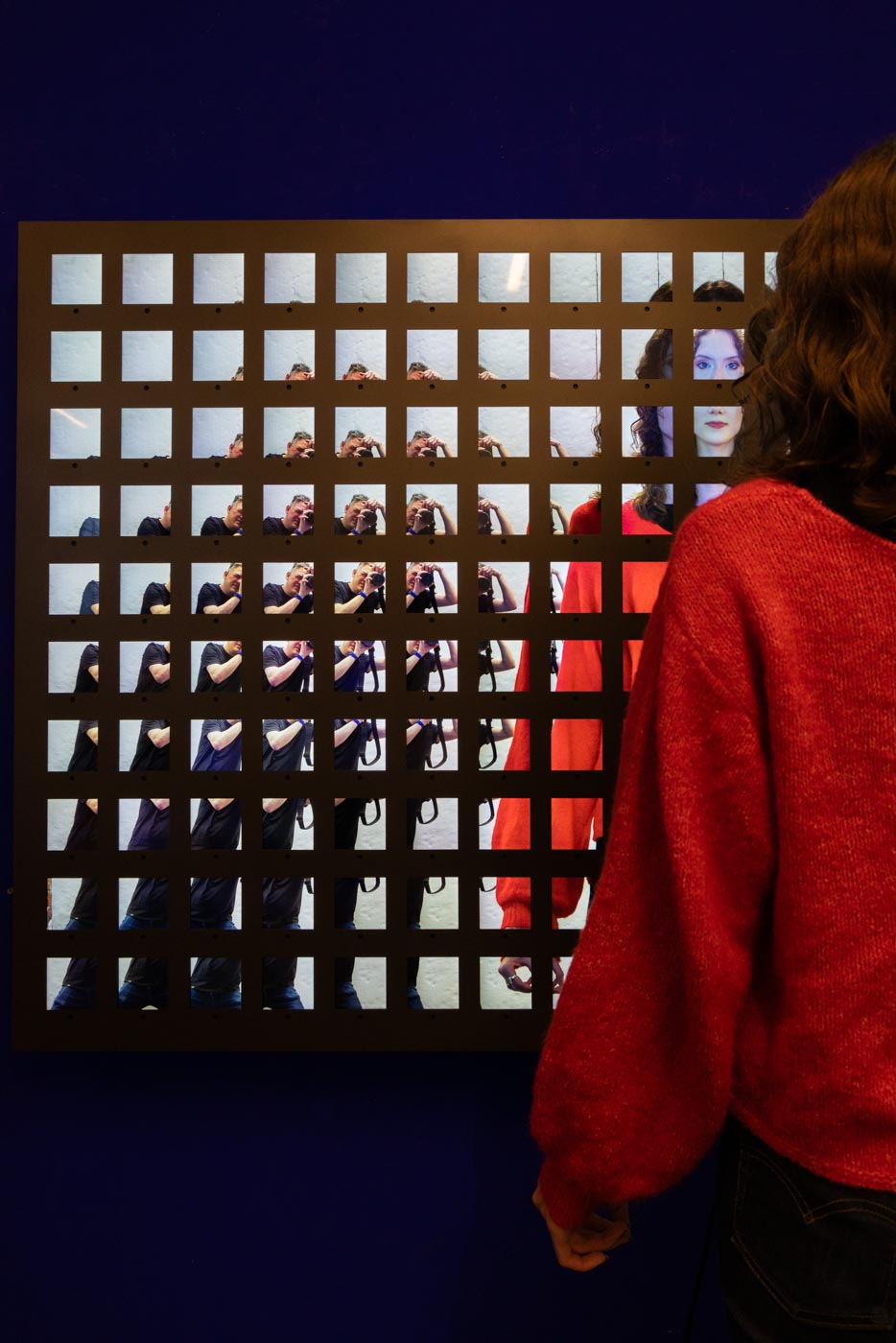
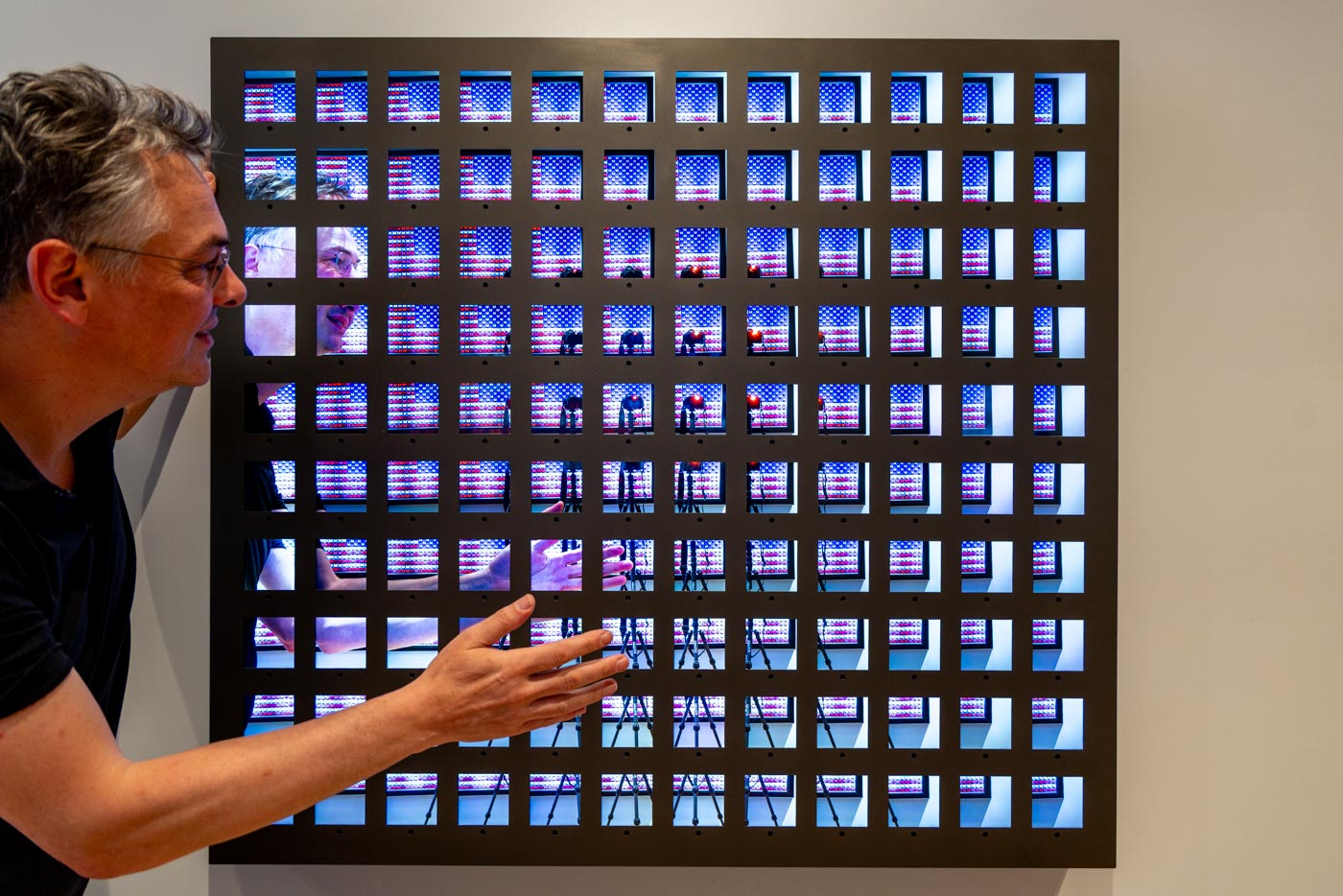
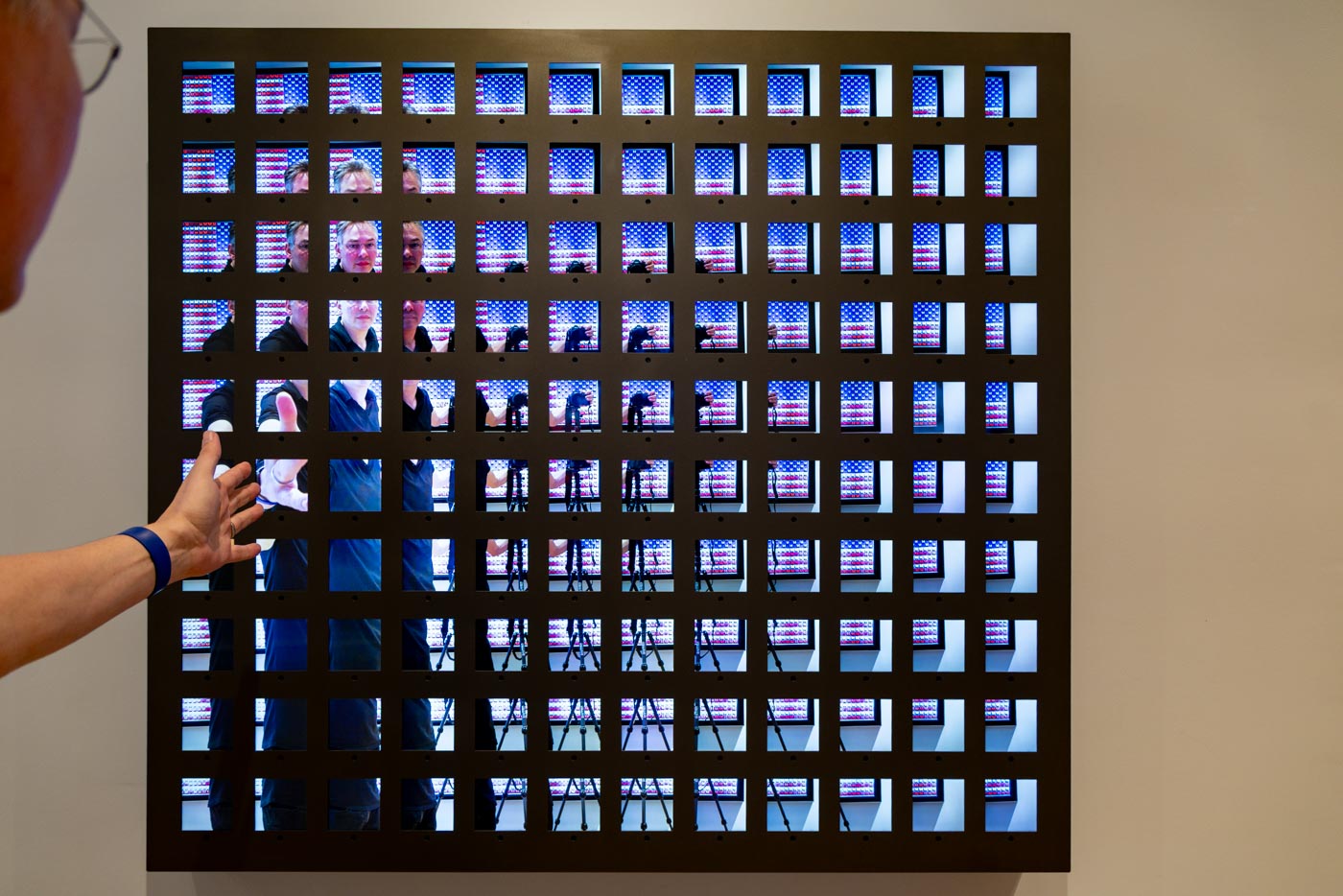
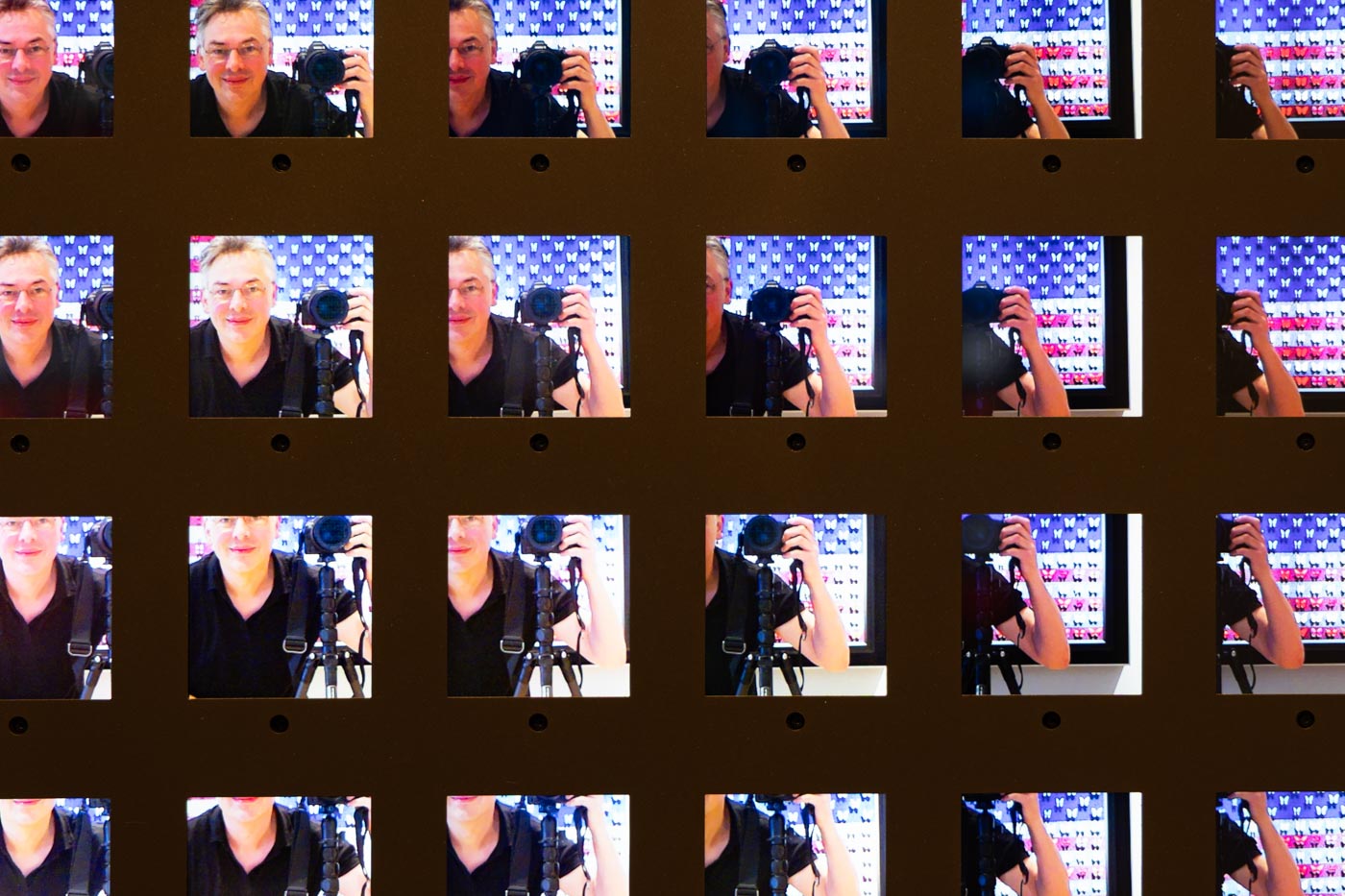
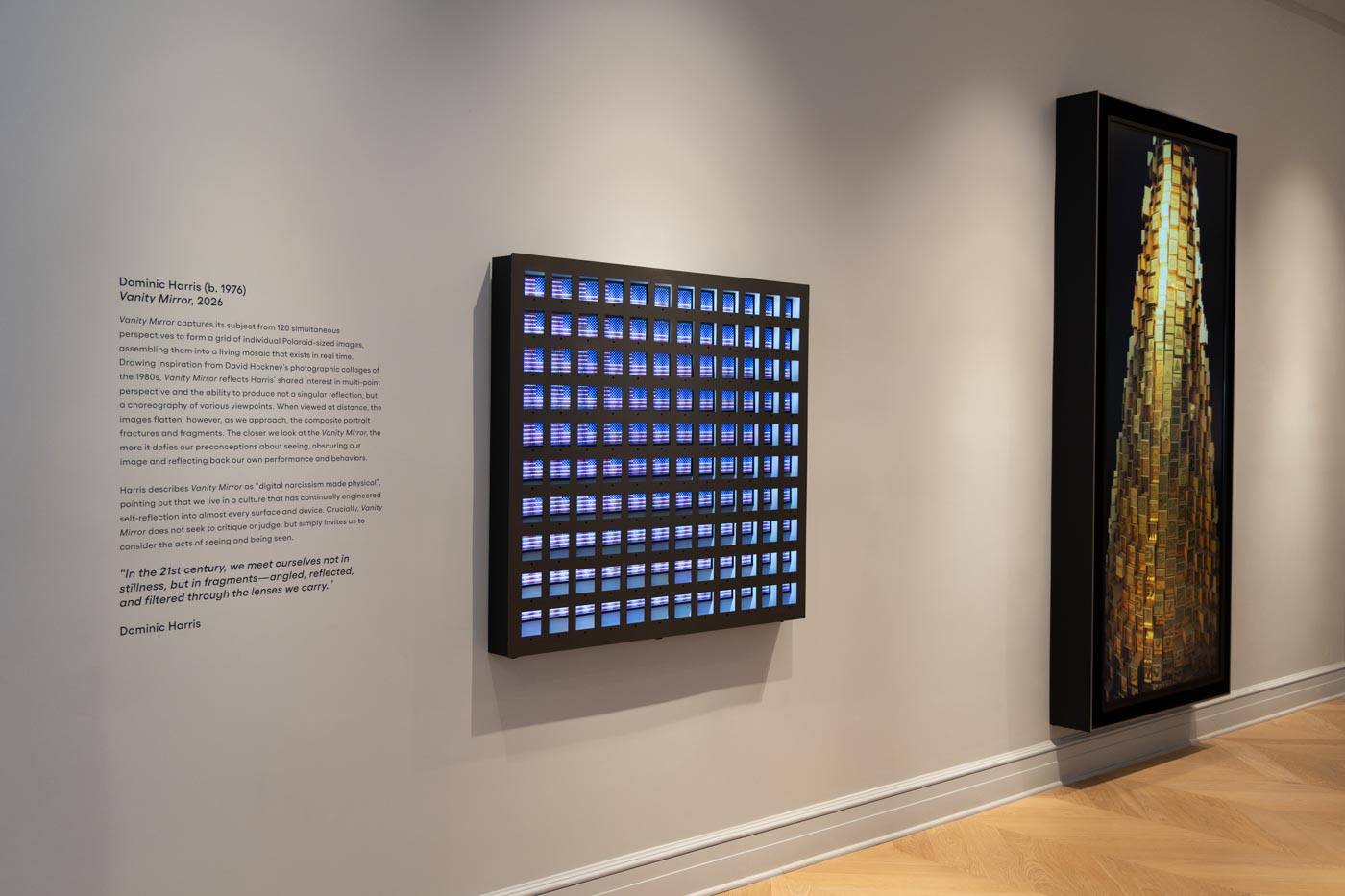
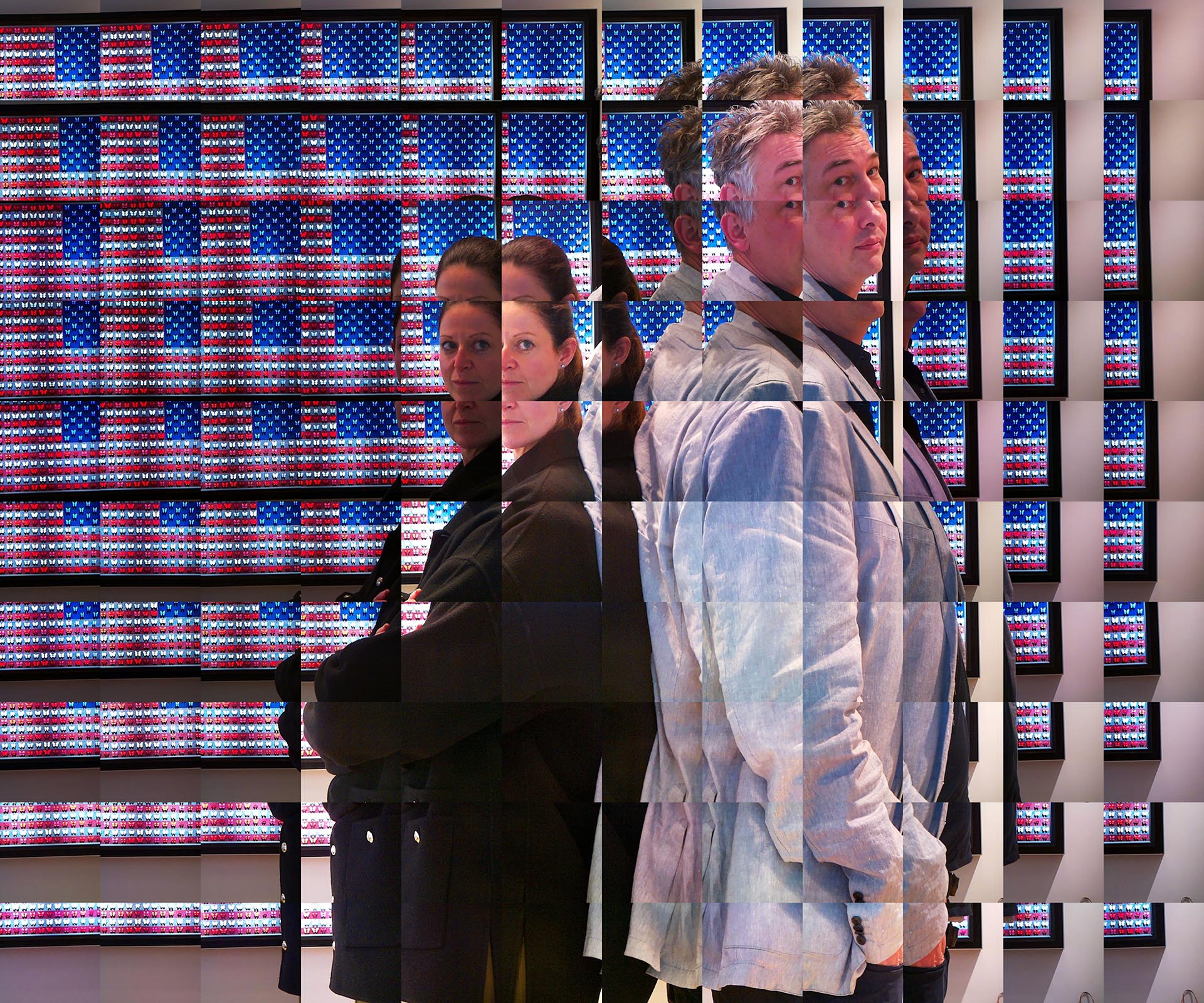
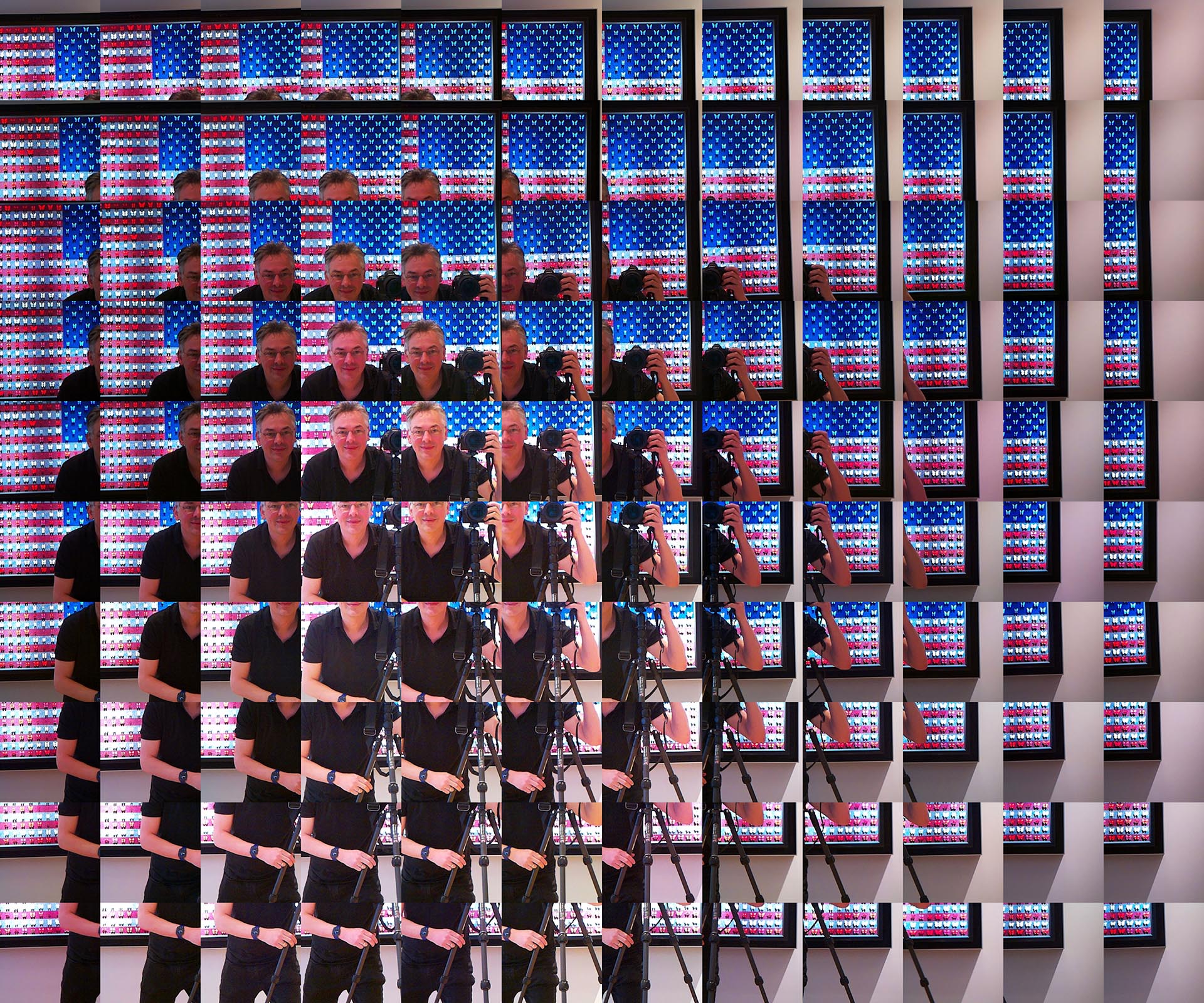
Dominic Harris's The Vanity Mirror is a seductive and performative artwork that captures a subject from 120 simultaneous perspectives. Composed of 120 individual cameras and screens arranged in a 10×12 grid, each echoing the dimensions of the classic Polaroid, it transforms real-time reflection into a living mosaic of multiplicity. Every screen carries its own live view, and every view is angled differently. The result is not a reflection in any conventional sense. The viewer is not mirrored back, but re-authored across 120 simultaneous views, each one true, none of them complete on its own.
The proportions of each individual screen deliberately echo the square frame of the Polaroid, an image format whose identity rested entirely on spontaneity and the single captured moment. Vanity Mirror takes that single moment and multiplies it. Every glance becomes an event, instantly held across the grid. Distance does the rest of the work. Stand close, and the 120 views collapse into a near-unified portrait, recognisable, intimate, almost one to one. Step back, and the same surface fractures. The viewer becomes a constellation of selves, repeated across the wall in 12 columns and 10 rows, each frame holding a fractionally different truth.
The Collection
Images
Information
Year:
2026
Edition:
Edition of 8 + 2 AP + 2 MP
Materials:
LCD screens, cameras, custom electronics, aluminium, steel
Details:
Dimensions (Metric):
1250 × 1143 × 95 mm
Dimensions (imperial):
49 ¼ x 45 x 3 ¾ inches
Commissioned by:
Context
Vanity Mirror is a work of algorithmic portraiture, and a response to the iconography of the selfie. The selfie has become the dominant photographic act of our time, and the gesture behind it, raising the phone, hunting for the angle, swiping past the imperfect frame, has reshaped how a generation thinks about its own image. Vanity Mirror short-circuits that logic. There is no perfect angle to find, because the work shows every angle at once. Not the best image, but every image at the same time.
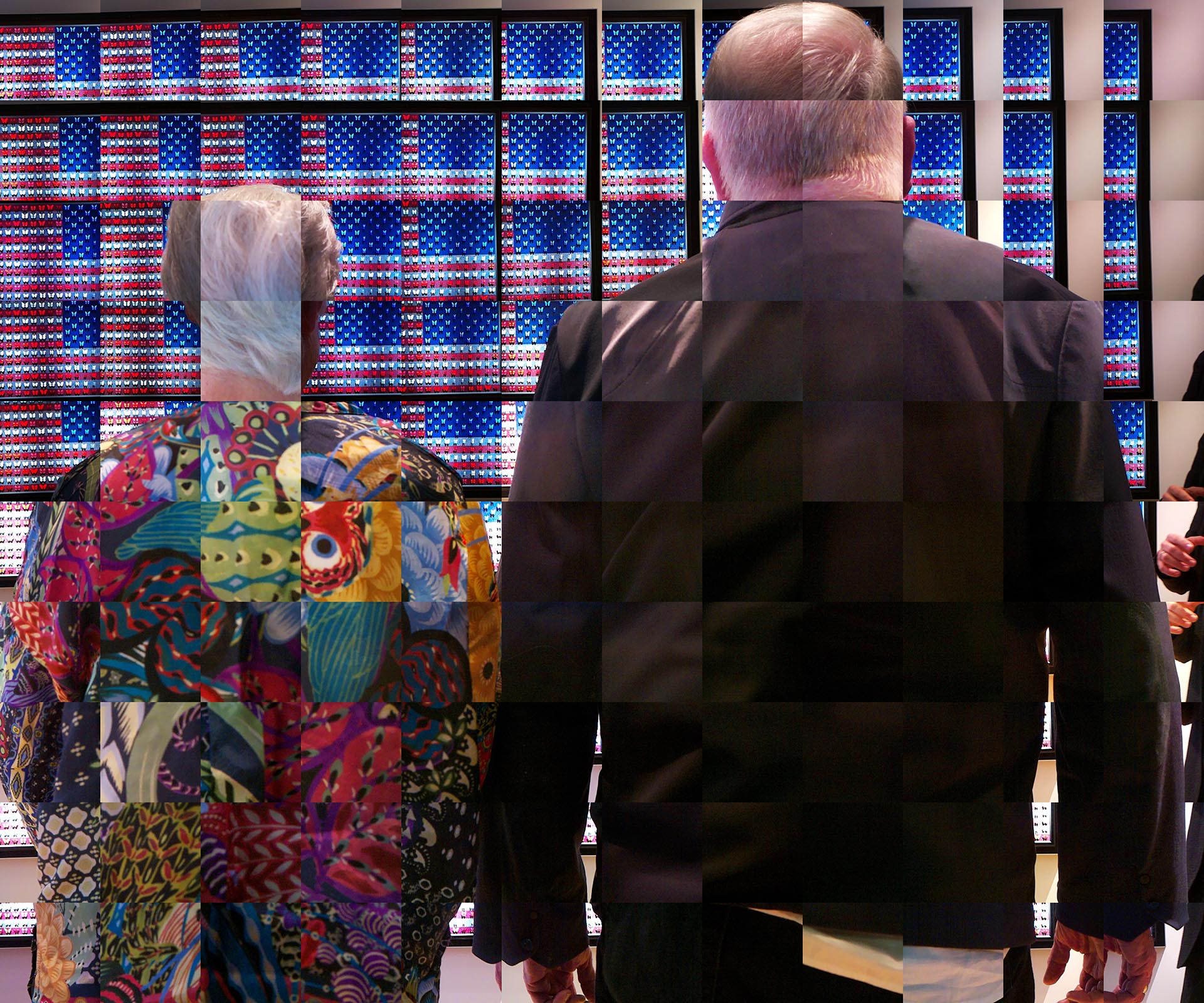
The technical foundation draws on research carried out at Stanford University into synthetic aperture camera arrays. That work demonstrated how a sufficiently dense lattice of lenses, treated as a single computational system, can capture spatial information unavailable to any one camera. Vanity Mirror redirects the principle towards self-portraiture. The conceptual antecedent is David Hockney’s photographic collages of the early 1980s, in which Polaroids were laid into multi-image grids that recorded a subject across time and across viewpoint. Hockney’s joiners argued that a single photograph was a fiction, and that the truer record of a moment was an assembly of partial views. Vanity Mirror takes that argument and flips its temporal logic. The image is no longer assembled after the fact. It is generated live, continuously shifting with the subject, and the subject is the viewer.
What the work asks is straightforward. In an age trained to see itself one filtered image at a time, what does it mean to be confronted with every view at once?
Related Artworks


SIMULATED (60)


Limitless


The Captive Grace

