
 ⤣ SERIES
NeoBloom: Concord
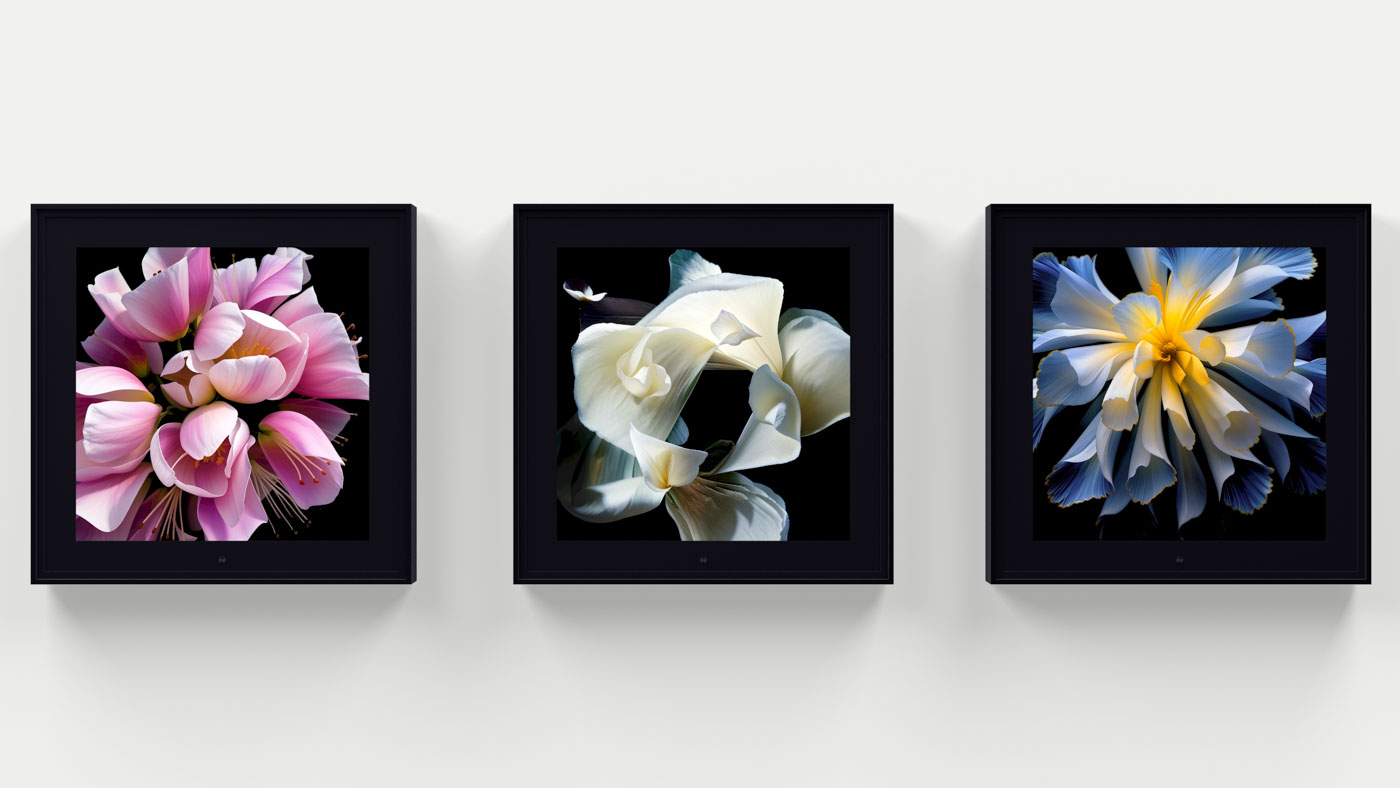
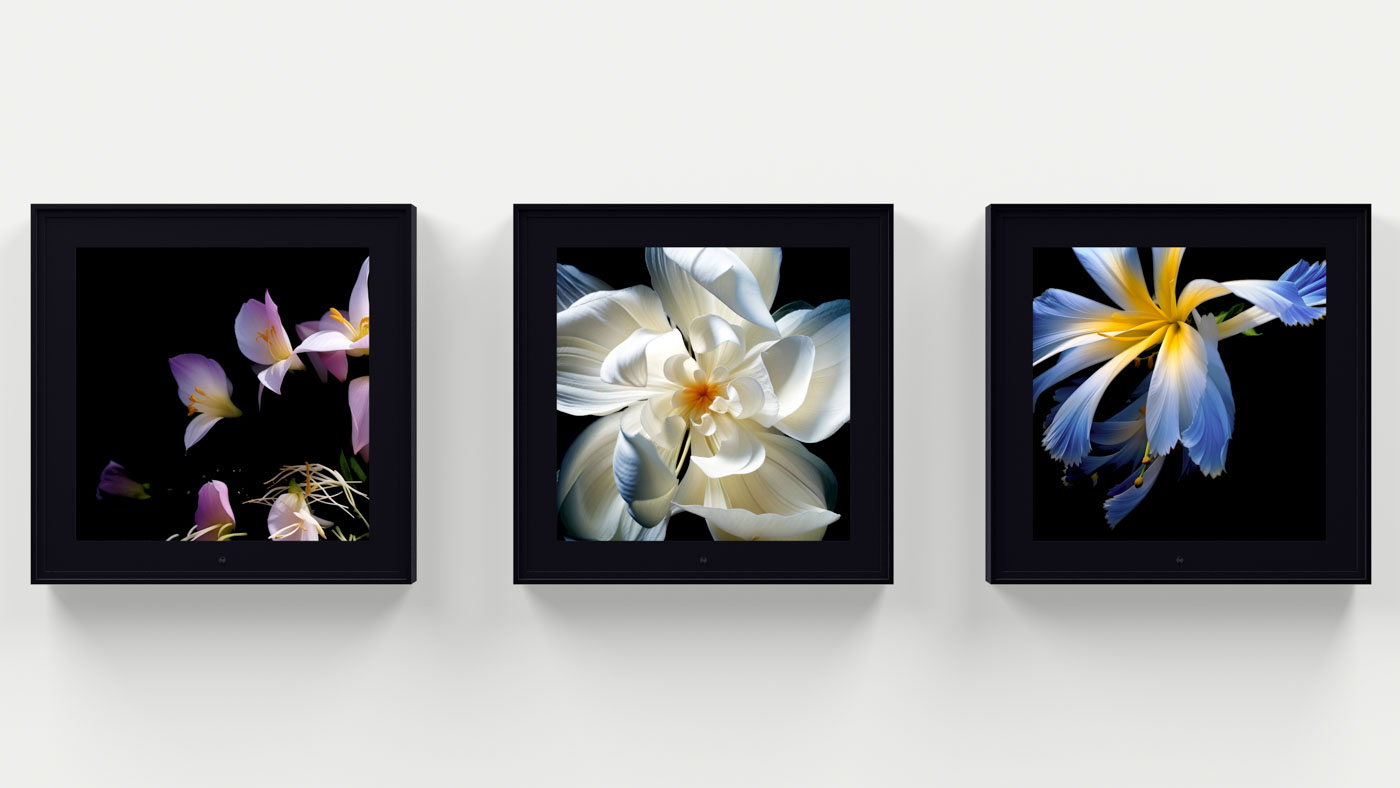
Concord is one of two digital canvases that together form the NeoBloom series. Within its single composition, three imagined flowers — Hippolyta, Moonshine and Titania — cycle in sequence, each appearing in its full bloom before dissolving and giving way to the next.
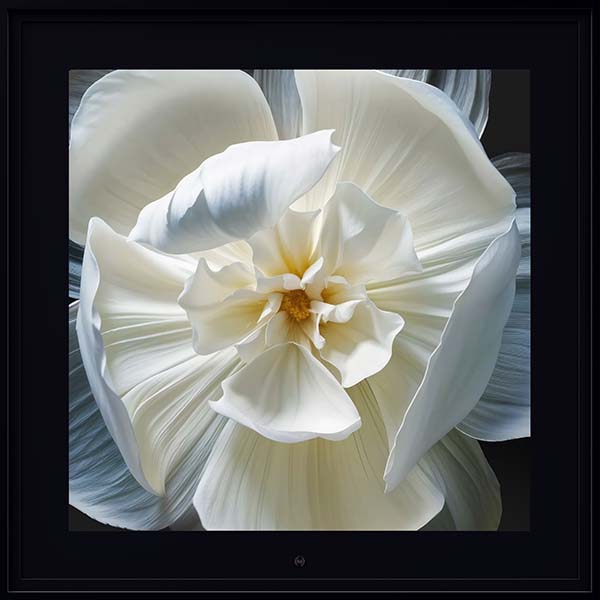
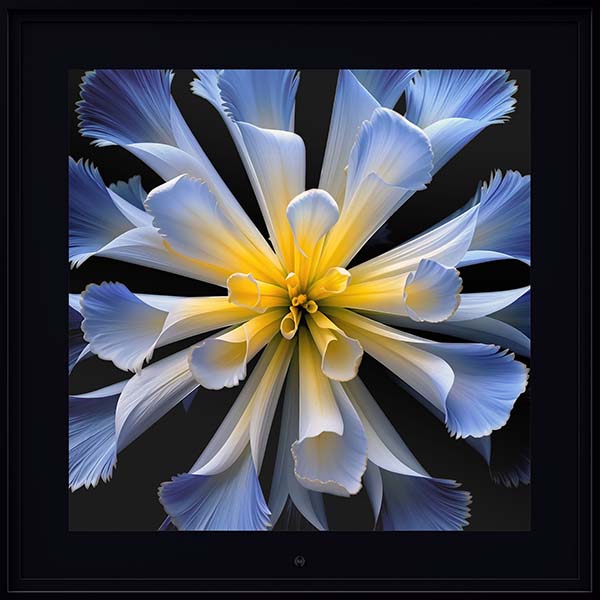
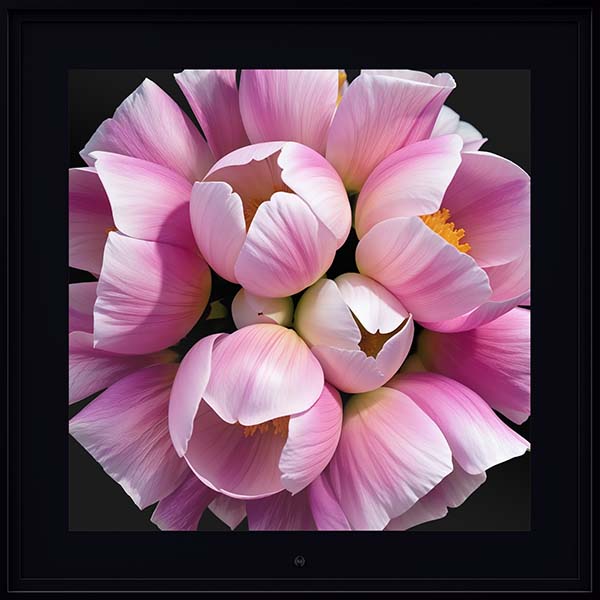
Hippolyta opens the sequence in white, her petals scalloped and overlapping, drawing on the classical strength of her Shakespearean namesake. Moonshine follows in blue, threaded with soft passages of white and gold that lend the bloom a spectral, moonlit quality. Titania closes the cycle in pink, layered and regal, a flower whose density and softness mirror the queen of the fairies herself.
As the viewer approaches, the canvas responds. The active flower breaks into a 'big bloom' — a synthesised dispersal of petals — before reforming and ceding the canvas to the next bloom in the sequence. The interaction collapses the boundary between observer and artwork, and locates the work within a continuous cycle of beauty and renewal in which the flowers never wilt.
Concord is conceived as one half of a paired statement. Read alongside its companion canvas Ascendant, the two works form a six-flower composition that holds individuality and harmony in deliberate tension.
The Collection
Images


Information
Year:
2025
Edition:
Edition of 8 + 2 Artist Proofs + 2 Museum Proofs
Materials:
Code, electronics, display, sensors, aluminium
Details:
NeoBloom: Concord is a single digital canvas. Three flowers — Hippolyta, Moonshine and Titania — share the composition, each appearing in full bloom before dissolving and giving way to the next in a continuous sequence.
Dimensions (Metric):
76 x 76 x 11 cm, framed
(W x H x D)
Dimensions (imperial):
29.8 x 29.8 x 4.1 inches, framed
(W x H x D)
Commissioned by:
Context
Concord is the more composed of the two NeoBloom canvases. Its three flowers — Hippolyta, Moonshine and Titania — share a tonal palette that moves through white, blue and pink, the transitions between them gentle rather than disruptive. The canvas reads as a single sustained chord rather than a sequence of contrasts.
The Shakespearean naming sits beneath the colour work. Hippolyta — queen of the Amazons in A Midsummer Night's Dream — opens the canvas in classical white, her petals scalloped and overlapping. Moonshine, named after the play's spectral thespian, follows in blue, threaded with passages of white and gold that lend the bloom its moonlit quality. Titania, queen of the fairies, closes the cycle in pink, her layered structure mirroring the regal complexity of her namesake.
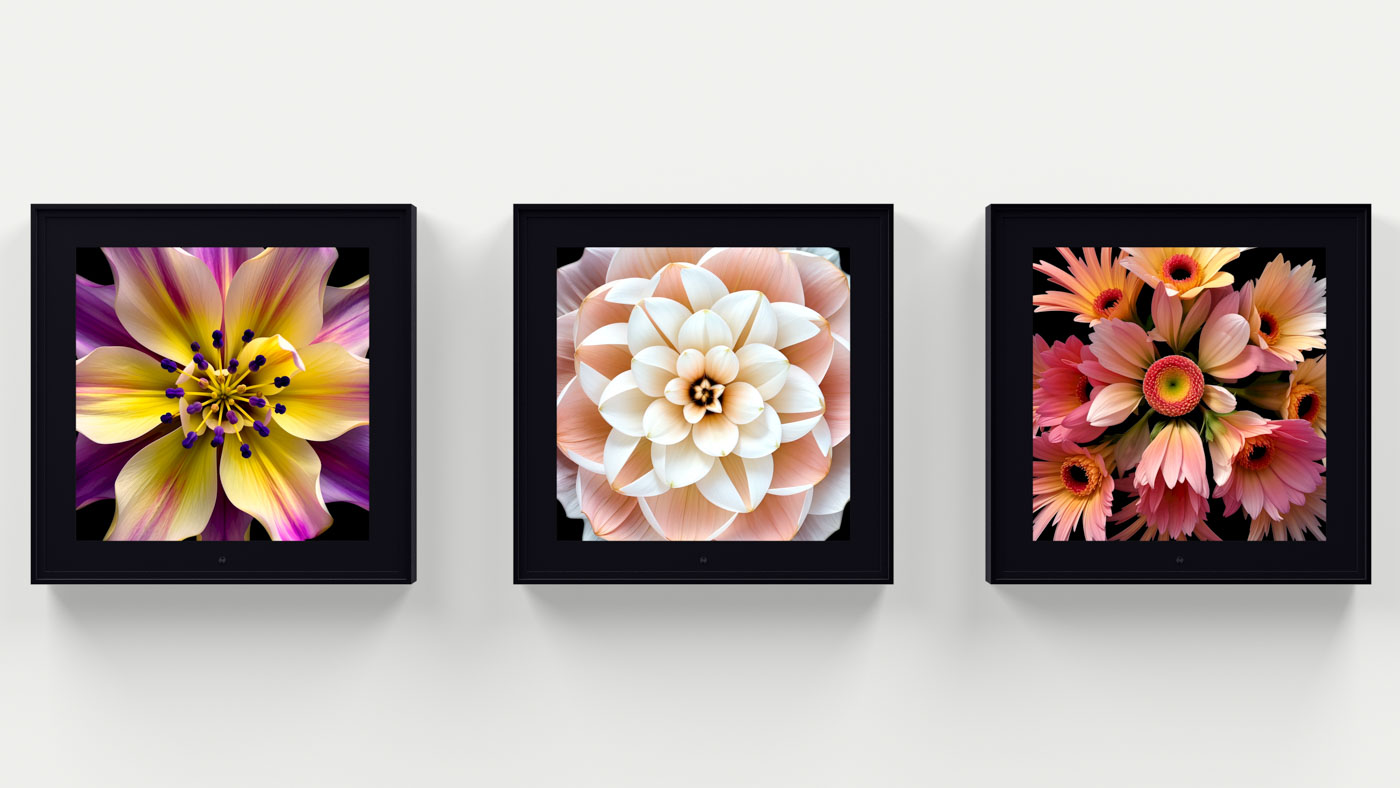
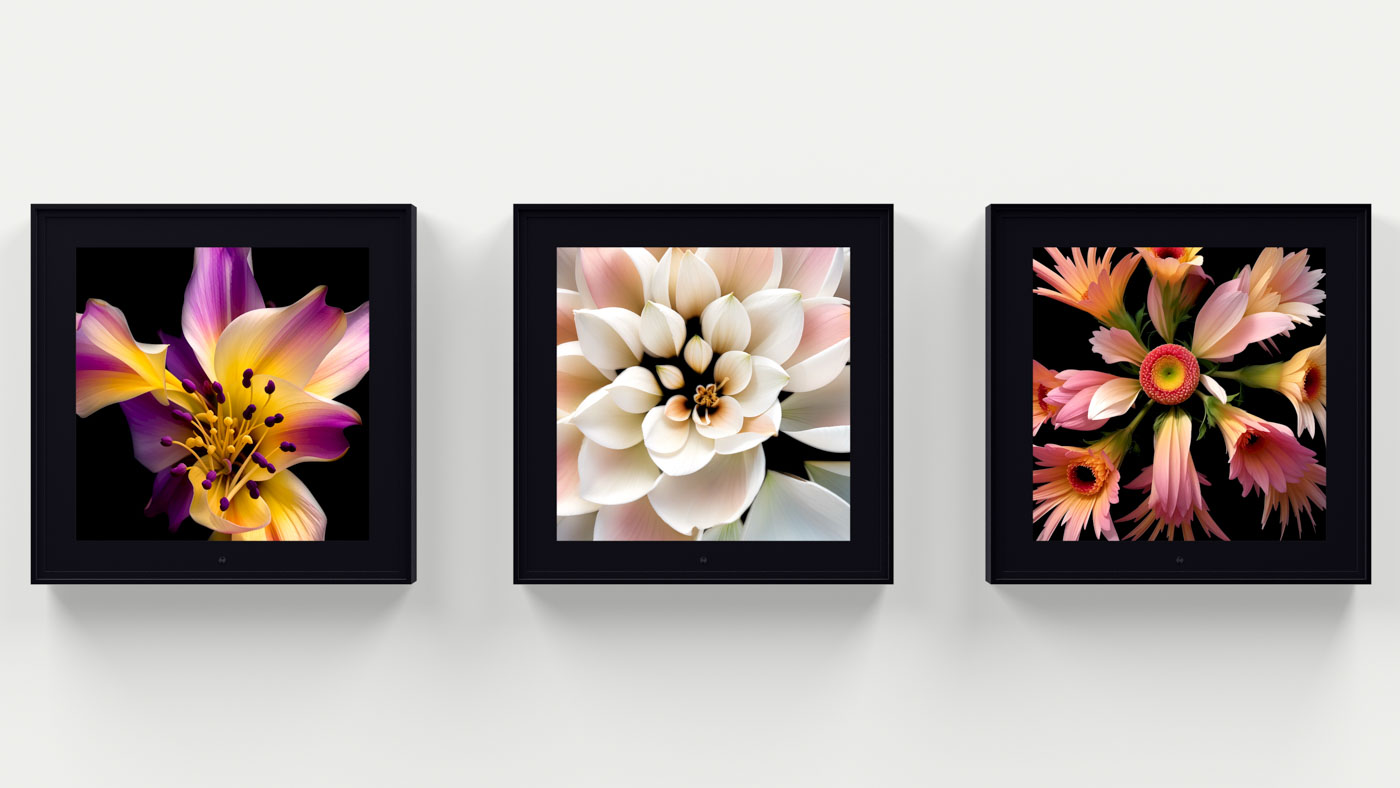
Concord is one half of a paired work. Read alongside its companion canvas Ascendant, the two together hold six flowers in a single composition that balances individual character against shared identity.
Related Artworks
NeoBloom: Ascendant


Bloomed: Full Series


The Captive Grace
%20by%20Dominic%20Harris_01_33_Grid%20of%20Nine-medium.webp)

Metamorphosis: Swallowtails

%20-%20white%20wall%20-%20web%20opt.webp)